

Where Can You Get a Piercing? A Guide to Piercing Placements
Piercings can be placed in many areas, from the earlobe and ear cartilage to the nose, eyebrow, lip and navel. But not every piercing suits every anatomy. Tissue type, daily habits, jewelry sizing and healing time all influence whether a placement is practical and appropriate. This guide covers the best-known piercing locations and the main points to consider before choosing one.
Where on the Body Can Piercings Be Placed?
Piercing placements can broadly be grouped into ear, facial and body piercings. The ear offers the widest variety of combinations, while common facial placements include the nostril, septum, eyebrow and lip. Body piercings may include the navel, nipple and selected surface areas.
Appearance is only part of the decision. Anatomy and healing behavior differ from one location to another, so cartilage and surface piercings in particular should be assessed by an experienced professional piercer.
What Are the Different Ear Piercing Placements?
The ear allows many different jewelry arrangements, but ear anatomy varies significantly. Some placements—such as rook, daith and industrial piercings—may not be suitable for every ear.
Lobe Piercing
A lobe piercing passes through the soft tissue of the earlobe rather than cartilage. It can be worn alone or combined with second and third lobe piercings for a layered ear look.
Earlobe piercings generally heal faster than cartilage piercings. A healing time of about six to eight weeks is common for lobes, while cartilage piercings can take much longer.
Helix Piercing
A helix piercing is placed along the outer upper cartilage of the ear. It can be styled with a small stud or, once fully healed and properly sized, with a hoop.
Tragus Piercing
The tragus is the small cartilage projection directly in front of the ear canal. Its thickness and angle vary between individuals, so jewelry length and placement need to be fitted to the anatomy.
Conch Piercing
The conch is the broad cartilage area in the center of the ear. Stud or labret-style jewelry is common for the inner conch. A hoop wrapping around the outer ear is typically considered after healing and once the correct diameter can be determined.
Daith Piercing
A daith piercing is placed in the inner cartilage fold above the ear canal. Because the area sits deep within the ear, angle and jewelry shape matter. Popular claims that daith piercings treat or prevent migraine should not be treated as medically proven; the choice is best made for aesthetic reasons and anatomical suitability.
Rook Piercing
The rook is the prominent inner cartilage ridge in the upper ear. Curved barbells are commonly worn here, but the ridge needs to be sufficiently defined for the placement to be anatomically suitable.
Industrial Piercing
An industrial connects two separate upper-cartilage piercings with a single straight bar. The two angles must align and the bar should not press against the flat of the ear, making anatomical assessment particularly important.

Where Can Facial Piercings Be Placed?
Nostril and Septum Piercings
A nostril piercing is placed through the side of the nose. A septum piercing is generally not passed through the hard central cartilage; in suitable anatomy, it is placed through a thinner area of tissue just below it. The exact location varies by anatomy.
Eyebrow Piercing
Eyebrow piercings are usually placed through the tissue toward the outer portion of the brow and commonly use curved barbells. As a surface-style placement, migration or rejection can occur, so placement and jewelry sizing should be professionally assessed.
Lip Piercing
Labret, Monroe and other lip piercings can be positioned around different areas of the mouth. For jewelry that rests inside the mouth, length and backing shape are particularly important because poorly fitted jewelry can repeatedly contact teeth and gums.
What Are Common Body Piercing Placements?
Outside the ear and face, piercings can be placed in areas such as the navel, nipple and selected surface locations. Tissue thickness, clothing friction, sleeping position and movement can have a greater impact on healing in these areas.
Surface piercings do not remain stable in every anatomy and can migrate or reject over time. A professional piercer should assess the location before the procedure.
What Should You Consider When Choosing a Piercing Placement?
- Have your anatomy assessed: Not every ear fold or body area can support every piercing type.
- Think about daily habits: Over-ear headphones, helmets, glasses, phone use and sleeping position can place pressure on certain piercings.
- Plan for healing time: Earlobes tend to heal faster than cartilage. Helix, tragus, conch, daith and rook piercings can take six to 12 months to heal fully.
- Let a professional size the initial jewelry: Swelling allowance, bar length and jewelry style matter in a fresh piercing.
- Ask about hygiene: Choose an experienced piercer who uses sterile single-use needles, sterilized equipment and provides written aftercare instructions.
How to Choose Piercing Jewelry
For a fresh piercing, material, sizing, surface finish and construction are as important as appearance. Professional piercing standards include implant-standard titanium among suitable materials and also accept solid gold when specific conditions are met.
Gold used in an initial piercing should be solid 14K or higher, nickel- and cadmium-free and alloyed for biocompatibility. Gold over 18K may be too soft for body jewelry, while plated, gold-filled and vermeil jewelry are not considered appropriate for new or unhealed piercings.
That means a “14K gold” label alone is not enough to establish suitability for a fresh piercing. When the alloy and manufacturing information are unknown, initial jewelry is best selected through a professional piercer using documented materials.
Once a piercing is fully healed, jewelry choices become much broader. Ear styling can then include small gold piercing pieces, hoops and cuffs. Ear cuffs do not require a piercing and do not serve the same function as body jewelry placed through a piercing channel.
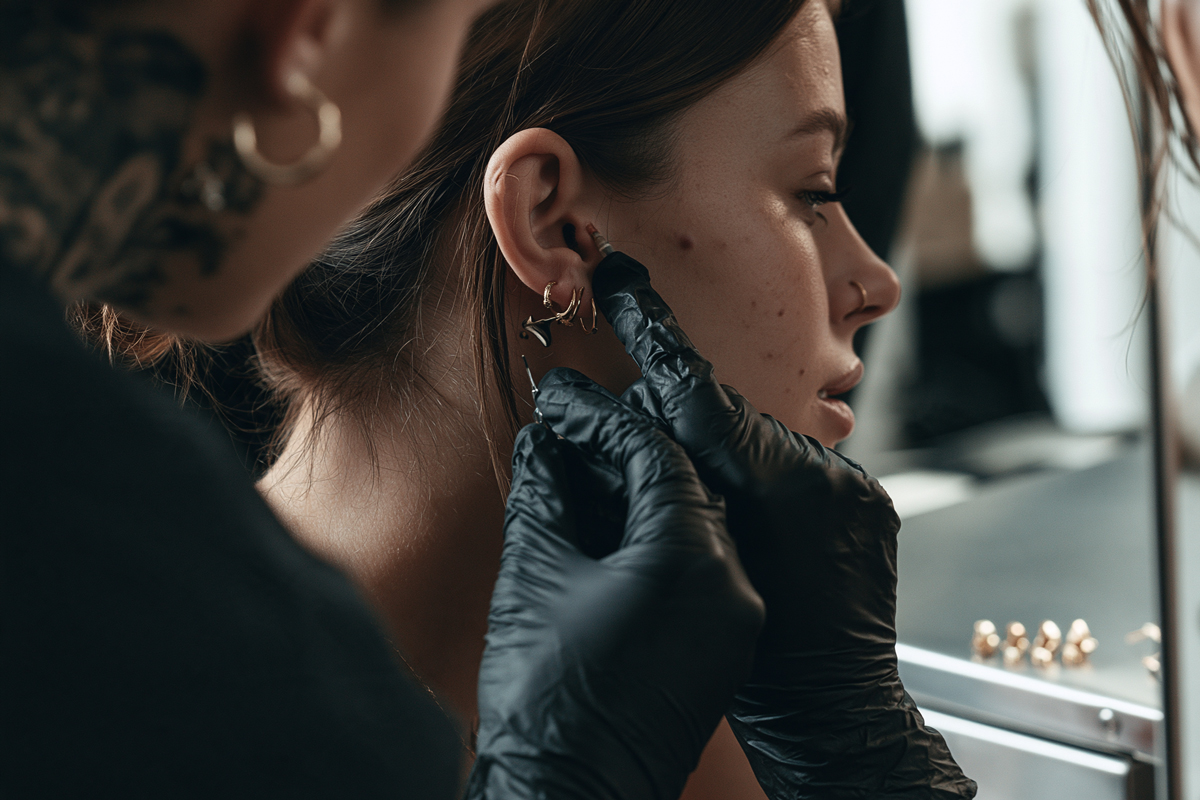
Create Your Own Ear Stack
Explore 14K gold designs for healed piercings and everyday ear styling.
Explore Piercing & Cuff EarringsFrequently Asked Questions
What are the most common piercing placements?
The earlobe is one of the most common placements. Helix, tragus and conch piercings are popular cartilage options, while nostril piercings are common on the face.
Which piercing is often chosen first?
The earlobe is often chosen because it generally heals faster than cartilage. Pain perception varies, however, and the best location depends on anatomy and lifestyle.
Do all piercing placements heal at the same rate?
No. Earlobes may heal in about six to eight weeks, while cartilage piercings such as helix, tragus, conch, daith and rook can take six to 12 months. Individual healing and aftercare affect the timeline.
Can 14K gold be used for an initial piercing?
Under specific conditions, yes. Gold for initial piercings should be solid 14K or higher, nickel- and cadmium-free and alloyed for biocompatibility. A 14K stamp alone is not sufficient.
When can initial piercing jewelry be changed?
Jewelry should not be changed simply because the piercing looks healed. Necessary sizing changes during healing should be performed by a professional piercer, and cosmetic changes should generally wait until the piercing is fully healed.