

How to Tell If Gold Is Real? Ways to Identify Real Gold
When buying gold jewelry or examining a piece you already own, one of the most common questions is, “Is this real gold?” Color, hallmark markings, weight and craftsmanship can provide useful clues; however, no single at-home method can provide a definitive result. The most reliable way to assess gold is to consider these signs together and use professional testing methods when necessary.
What Are the Characteristics of Real Gold?
Gold differs from other metals through its distinctive color, density and chemical properties. In jewelry, pure gold is commonly alloyed with other metals. This helps improve durability, create different forms and produce different color options.
What Does Real Gold Look Like?
Pure gold naturally has a warm yellow color. In jewelry production, metals such as silver, copper and palladium can be added to create yellow gold, white gold or rose gold tones. For this reason, color alone is not enough to determine whether a piece of jewelry is real gold.
Well-made gold jewelry is generally expected to have an even-looking surface, carefully finished connection points and no obvious color changes resembling peeling plating. However, appearance alone does not confirm the karat or authenticity of gold.
Does Real Gold Tarnish or Change Color?
Pure gold is highly resistant to oxidation. However, 14K and 18K gold jewelry is not made entirely of pure gold. Other metals in the alloy, conditions of use, cosmetics, perspiration, chemicals and surface treatments may cause changes in appearance over time.
Therefore, a slight color change on a gold necklace, ring or bracelet does not by itself mean that the piece is fake. If there is a significant change, having the jewelry checked by a jeweler is the better approach.
How Can You Tell If Gold Is Real?
At-home checks can provide initial clues about gold. However, these methods should be considered preliminary assessments rather than definitive gold tests.
Important: At-home methods such as magnet, water or surface tests cannot determine gold authenticity or karat with certainty. Avoid methods that may scratch valuable or delicate jewelry, and choose professional testing when accuracy is important.
Check Gold Hallmarks and Karat Marks
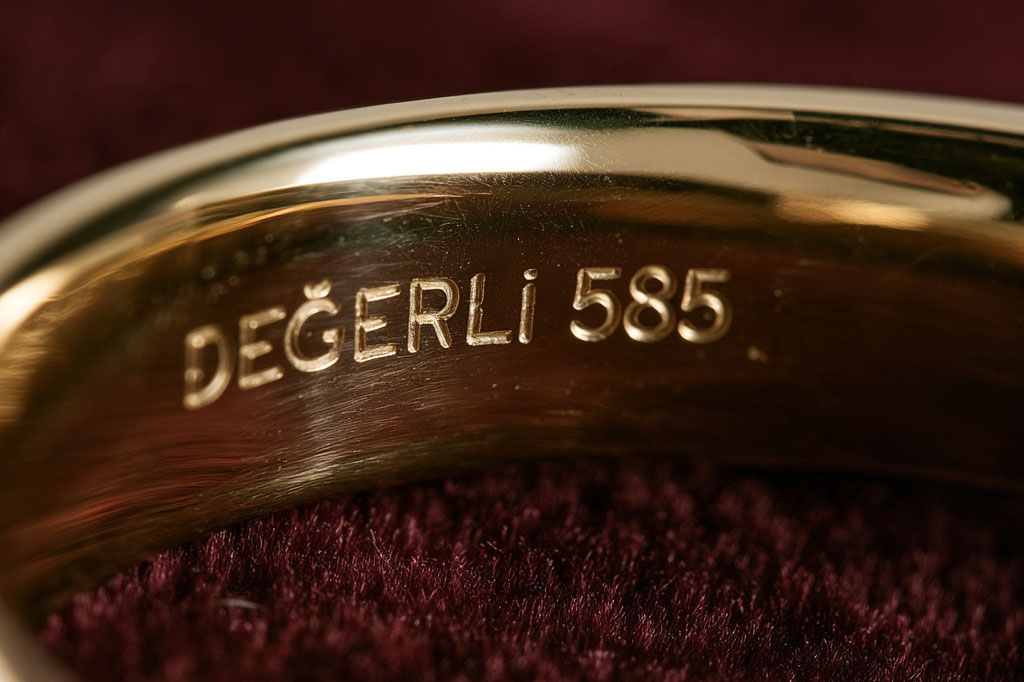
You can first check the inside of a ring, the area around a necklace or bracelet clasp and suitable connection points on earrings. Gold jewelry may carry karat marks such as 14K or 18K, or fineness marks such as 585 and 750. A magnifying glass can help when examining small marks.
However, the presence of a hallmark does not prove that the product is genuine on its own. The hallmark should be considered together with the other characteristics of the item, purchase documentation and professional test results when necessary.
Testing Gold with a Magnet
Gold is not a strongly magnetic metal. If a piece of jewelry is clearly attracted to a magnet, this may indicate that it contains other metals with magnetic properties. On the other hand, a piece that is not attracted to a magnet is not necessarily gold, as many non-gold metals are also non-magnetic. Clasps, springs or connecting parts may also contain different metals from the rest of the jewelry.
Is the Ceramic Surface Test Reliable?
The ceramic scratch test often recommended online involves examining the color of the mark left by the metal. However, this method may cause scratches and surface damage, especially on polished, plated or finely crafted jewelry. It also does not provide a reliable karat determination on its own. For this reason, we do not recommend applying it to valuable jewelry.
Can Gold Be Tested with Water?
Because gold has a high density, a small gold item will generally sink when placed in water. However, it is not correct to conclude that “if it sinks, it is real.” Many metals other than gold also sink in water, while hollow designs, stone-set pieces and different alloys can affect the perceived weight of jewelry.
Can You Tell If Gold Is Real by Its Weight?
Gold is a dense metal and may feel heavier in the hand than some metals of a similar size. However, modern jewelry can include hollow construction techniques, stones, different chain structures and other design details, so it is not possible to determine authenticity or karat simply by holding the piece.
What Do the Marks and Numbers on Gold Mean?
Numbers found on gold jewelry generally refer to the fineness of the metal expressed in parts per thousand. Since the marks used can vary by country, manufacturer and standard, the values below should be considered common equivalents.
| Common Mark | General Equivalent | Approximate Pure Gold Content |
|---|---|---|
| 585 / 14K | 14K gold | About 58.5% |
| 750 / 18K | 18K gold | 75% |
| 916 / 917 / 22K | 22K gold | About 91.6–91.7% |
| 995 / 999 / 999.9 | High-purity gold | 99.5–99.99% |
How Is Gold Karat Determined?
Gold karat refers to the proportion of pure gold in an alloy. In the karat system, 24K theoretically represents pure gold; as the karat decreases, the proportion of other metals in the alloy increases. This change also affects color, hardness and wear characteristics.
How Can You Identify 14K Gold?
14K gold jewelry commonly carries a 14K or 585 mark. Its alloy structure provides durability and design flexibility for everyday jewelry. Değerli Kuyumculuk collections also focus on modern 14K gold jewelry designed for everyday use.
How Can You Identify 18K Gold?
18K gold is commonly identified by an 18K or 750 mark. Because its pure gold content is higher than that of 14K gold, yellow gold pieces may have a richer gold tone. The final color can still vary depending on the composition of the alloy.
How Can You Identify 22K Gold?
22K gold items may carry marks such as 22K, 916 or, under some standards, 917. Because of their high pure gold content, these alloys are softer. This is why they are commonly used in traditional bangles and similar products, while harder alloys may be preferred for very fine or heavily stone-set everyday designs.
How Can You Identify 24K Gold?
The term 24K is used for gold with very high purity. Values such as 999 and 999.9 indicate high fineness, while 995 is another high-purity level that can be encountered in investment and refinery products. As gold approaches pure form, the metal becomes softer, which is why 24K gold is less common in everyday jewelry than 14K or 18K.
What Are the Differences Between Fake Gold and Real Gold?
On fake or gold-colored products, plating may wear away over time, revealing the color of the base metal or creating visible color differences around connection points. However, color change, weight or marks left on the skin are not enough on their own to reach a definite conclusion.
When evaluating authenticity, the hallmark, craftsmanship, reliability of the seller, invoice or certificate information and professional test results when necessary should be considered together.
How Is Gold Authenticity Checked by a Jeweler?
Results closest to certainty are obtained through professional methods performed by an expert. The method used may vary depending on the structure of the jewelry and the level of measurement accuracy required.
- Touchstone and acid testing: A controlled streak taken from the metal is compared using reference samples and suitable testing solutions. The method requires experience and should not be carried out at home.
- XRF analysis: X-ray fluorescence equipment can be used to analyze the elemental composition of the metal surface without damaging the item. Results should be interpreted with the product structure, coatings and solder areas in mind.
- Density and other measurements: Professional measurements based on the relationship between weight and volume can provide supporting data. The method has limitations for stone-set, hollow or multi-part jewelry.
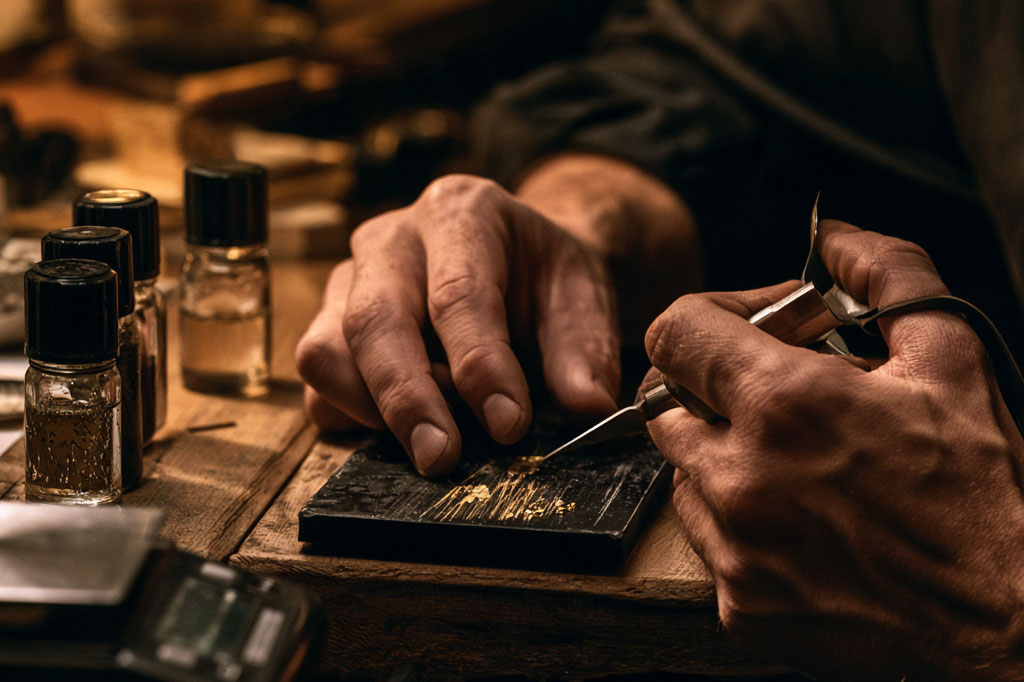
Professional inspection is especially important for second-hand, undocumented or unknown-origin products. When purchasing new jewelry, choosing a reliable jeweler, reviewing product information and making sure after-sales support is available can make the process much safer.
Frequently Asked Questions
Does real gold stick to a magnet?
Gold is not strongly magnetic. Clear attraction to a magnet may indicate the presence of other metals; however, not being attracted to a magnet does not prove that the item is real gold.
Does real gold sink in water?
Gold is a dense metal and generally sinks. However, many other metals also sink in water, so this method alone is not a reliable authenticity test.
Does real gold tarnish?
Pure gold is highly resistant to oxidation. In jewelry alloys, other metals, cosmetics, chemicals and conditions of use may cause changes in surface appearance over time.
Can real gold change color?
Pure gold itself is highly stable; however, alloyed or surface-treated jewelry may show changes in color or shine depending on use. This alone does not mean the product is fake.
Is karat marked on gold jewelry?
Gold jewelry commonly carries karat or fineness marks such as 14K, 18K, 585 or 750. Hallmarking practices may vary depending on country, standard, production period and product type.
What does 585 mean on gold?
A 585 mark indicates that the alloy contains approximately 58.5% pure gold and commonly corresponds to 14K gold.
14K Gold Designs Made for Everyday Life
Explore Değerli Kuyumculuk’s 14K gold collections, from understated details to more distinctive designs.
Explore All Jewelry