
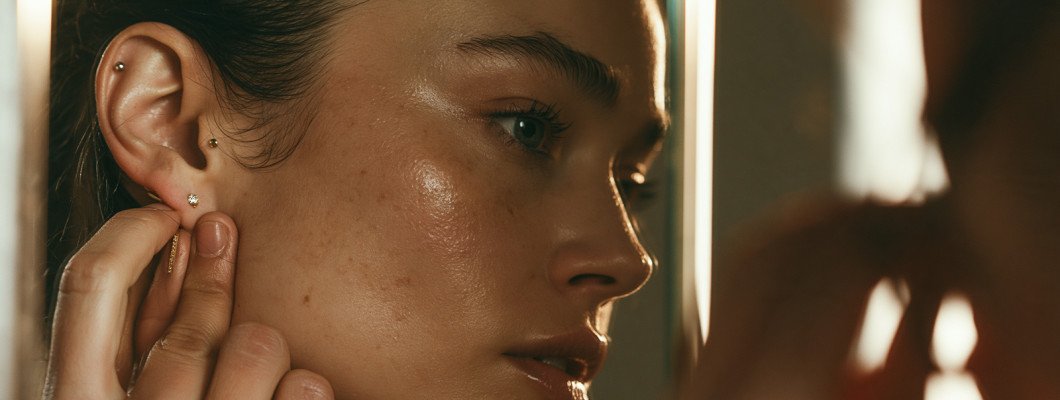
Changing jewelry in a healed piercing is often quick, but twisting or pulling without knowing the closure can irritate the channel or damage the jewelry. Threaded, threadless, ring and labret styles open differently, and fresh or unhealed piercings should not normally be changed at home. Before removing anything, make sure the piercing is genuinely healed and identify the type of jewelry you are wearing.
When Can Piercing Jewelry Be Removed?
A piercing can look calm on the outside while the channel is still healing internally. Jewelry is generally safer to change when the area is no longer tender, the minimum healing period has passed and there is no ongoing secretion or crusting.
Earlobe piercings may heal in around six to eight weeks, while cartilage placements such as helix, tragus, conch, daith and rook may take six to 12 months to heal fully. Healing varies by person, so time alone should not be the only guide.
If jewelry needs to be resized during healing, have a professional piercer perform the change. Removing initial jewelry too early can allow the channel to shrink and may make reinsertion difficult.
What Should You Do Before Removing Piercing Jewelry?
If the piercing is fully healed and you are changing the jewelry at home, wash your hands first. Keep the piercing site, replacement jewelry and work area clean, use good lighting and avoid rushing.
If the jewelry feels stuck, do not apply increasing force. The channel may have tightened or the closure may be different from what you expect.
How to Remove Different Types of Piercing Jewelry
How to Remove Threaded Jewelry
Threaded barbells and labrets may have one or two removable ends. Hold one side steady and turn the removable end to the left, or counterclockwise, to loosen it. If it does not behave like a screw, stop rather than forcing it—it may be threadless or simply too tight.
How to Remove Threadless / Press-Fit Jewelry
Threadless jewelry has no screw threads. The decorative end and post are held together by tension. Stabilize one side and gently pull the two components straight apart without tugging on the piercing channel.
How to Remove Ring Jewelry
Ring closures vary. Hinged clickers open at the seam. Seam rings and fixed-bead styles are generally opened by twisting the ends in opposite directions like a spiral rather than pulling the ring wider. Captive-bead and segment rings may require appropriate tools; if the ring resists, a professional piercer is the safer option.
How to Remove a Labret
Flat-back labrets may be threaded or threadless. Stabilize the flat disc, then check the front: turn it counterclockwise if threaded or pull straight apart if it is press-fit. Do not force it if you are unsure which system you have.
What to Do If Piercing Jewelry Will Not Come Out
Dried secretion or surface buildup can sometimes make jewelry harder to move. A warm shower or gentle cleaning with sterile wound-wash saline may help soften surface debris.
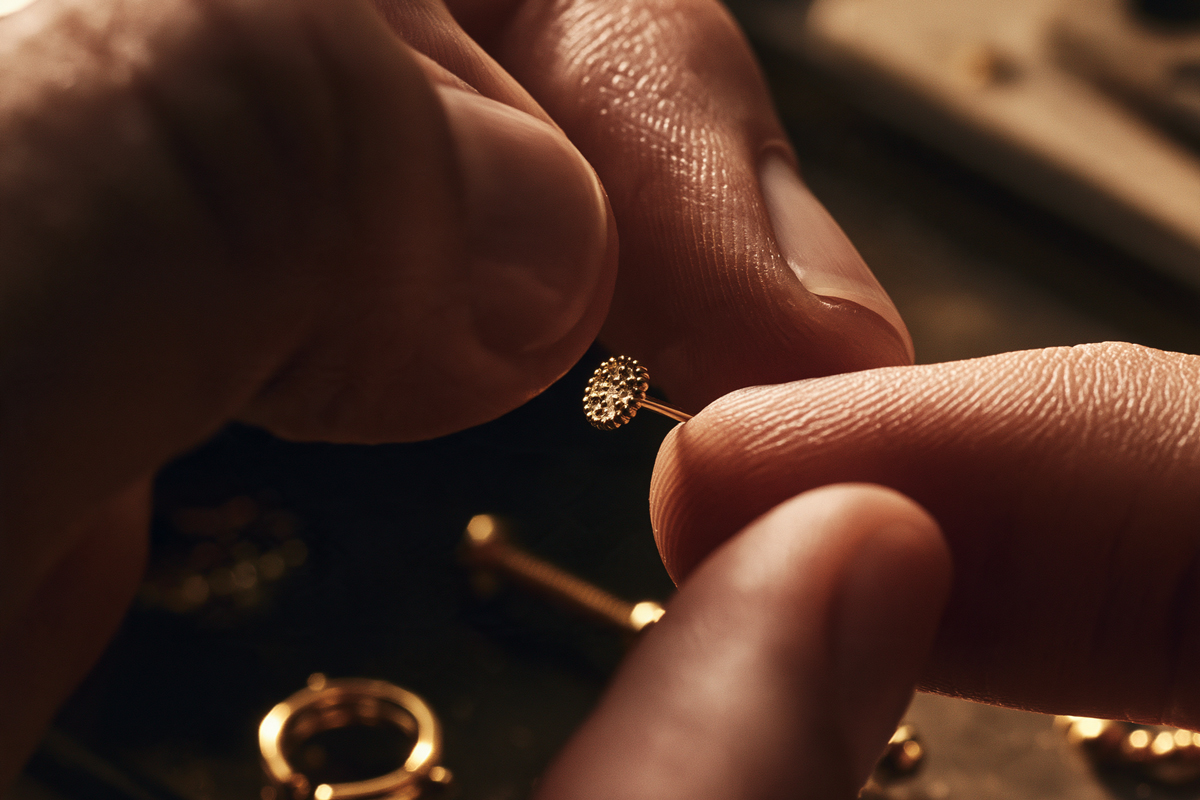
If the jewelry still will not open, do not use household pliers or tweezers to force it. Piercing studios have suitable tools and can control the jewelry without placing unnecessary stress on the tissue.
If you suspect an infection, do not remove the jewelry on your own. Increasing redness, warmth, swelling, pus, severe pain or fever should be medically assessed. In some infections, removing jewelry can allow the surface to close and interfere with drainage, so a healthcare professional should advise whether the jewelry stays in place.
Why Should Fresh Piercing Jewelry Not Be Removed Too Early?
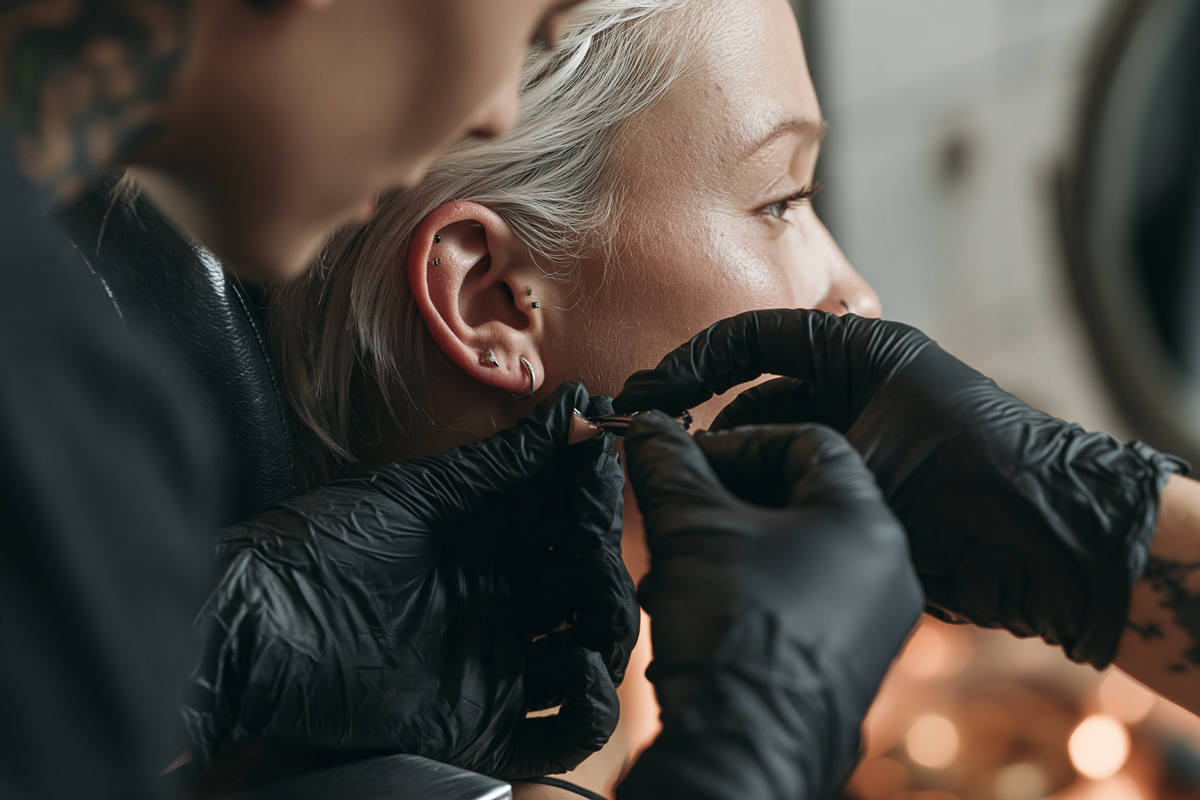
A fresh piercing is a healing wound channel. Initial jewelry is selected to accommodate swelling, maintain the channel and support healing. Removing it too early can allow the piercing to narrow or close rapidly.
Some piercings need a shorter post once the initial swelling has settled. This “downsize” may happen before full healing and should therefore be performed by a professional piercer.
How to Care for the Area After Removing Jewelry
If you are retiring the piercing permanently, continue normal gentle hygiene while the channel closes. Avoid squeezing the area, picking crusts or using harsh antiseptics.
- Keep it clean: Gentle rinsing with sterile wound-wash saline and drying with clean disposable gauze or paper products may be enough.
- Do not assume how long it will stay open: Even well-healed piercings can shrink or close quickly, and there is no universal safe time window.
- Do not force reinsertion: If the channel has tightened, pushing jewelry through can tear tissue. A piercer may be able to assess it and use an insertion taper.
- Watch persistent symptoms: Pain, swelling or discharge that continues after jewelry removal needs professional assessment.
What to Consider When Changing Piercing Jewelry
For a healed piercing, size, gauge, length, surface quality and material all matter. If replacement jewelry does not slide in easily, stop rather than pushing it through.
For fresh or unhealed piercings, a “14K gold” label alone does not establish suitability. Initial jewelry needs appropriate alloy composition, smooth finishing and professional piercing quality. Once a piercing has healed, jewelry options become much broader.
Change It Without Forcing It
Explore 14K gold styles for healed ear piercings and everyday ear styling.
Explore Piercing JewelryFrequently Asked Questions
How soon can piercing jewelry be removed?
There is no single timeline. Earlobes may heal in about six to eight weeks, while cartilage piercings can take six to 12 months. Initial jewelry should not be removed for cosmetic changes before the piercing is fully healed.
Which way do you turn a piercing ball to remove it?
On threaded jewelry, the removable end generally loosens counterclockwise. Threadless jewelry does not unscrew and instead pulls straight apart.
How do you remove stuck piercing jewelry?
Gently clean any surface buildup, but do not force the jewelry with household tools. If it remains stuck, see a professional piercer.
Will a piercing close if jewelry is removed?
It can. Piercings shrink and close at very different rates, and even long-healed channels may narrow faster than expected.
When can piercing jewelry be changed?
Consider changing it once the minimum healing time has passed, the piercing is not tender and secretion or crusting has stopped. Changes needed during healing should be performed by a professional piercer.
Should removing a healed piercing hurt?
Significant pain is not expected from removing well-fitted jewelry in a fully healed piercing. If you feel pain, snagging or strong resistance, stop rather than forcing it.
Should infected piercing jewelry be removed?
Do not remove it on your own if infection is suspected. Ask a healthcare professional whether the jewelry should remain in place.