
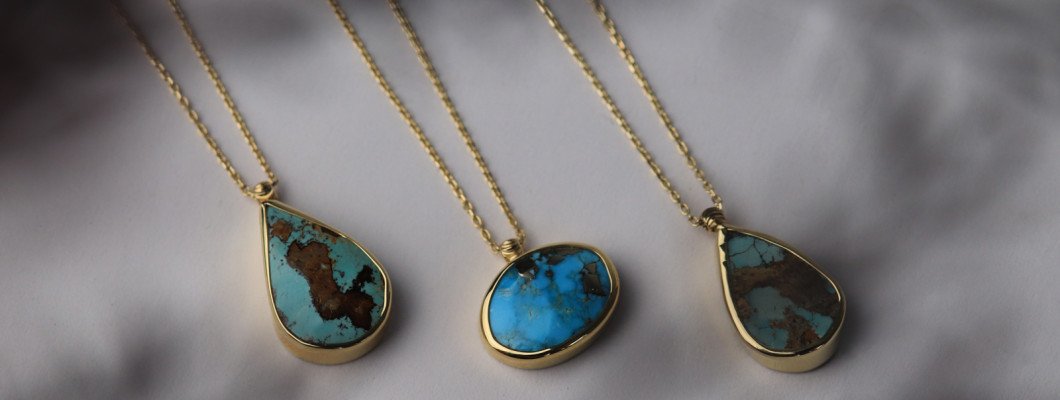
What Are the Properties of Turquoise? A Complete Guide
Turquoise has been used in jewelry for thousands of years and remains instantly recognizable for its distinctive blue-to-green color. Beyond its appearance, turquoise is also known for its porous structure, Mohs hardness of about 5 to 6 and particular care requirements. Understanding these characteristics, along with common treatments and imitations, can help you make a more informed choice.
What Is Turquoise?
Turquoise is a hydrated copper and aluminum phosphate mineral. It is usually opaque, although some material can be semitranslucent. In jewelry, it is commonly fashioned into cabochons, beads and small pieces for inlay work.
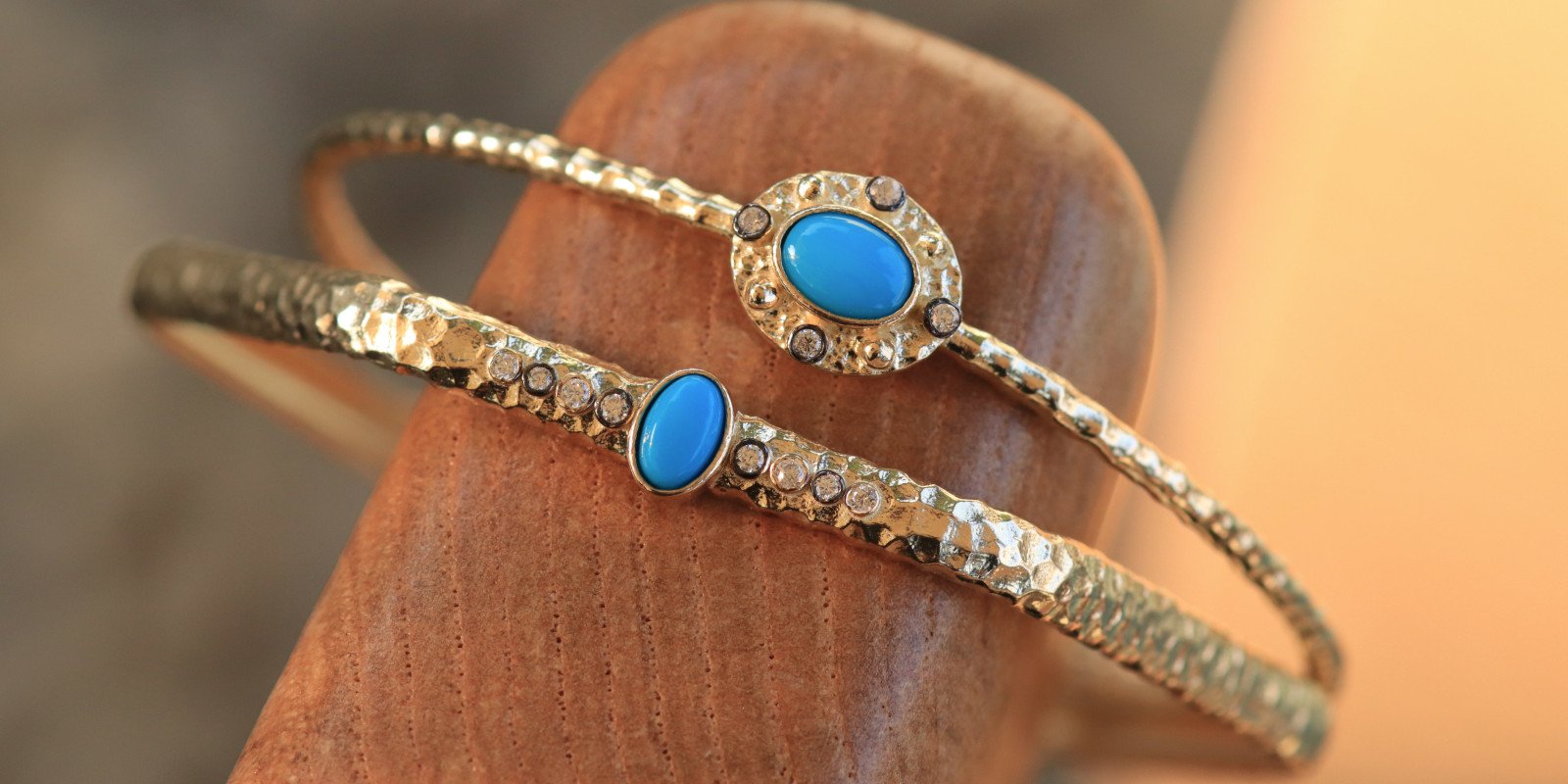
Its blue-to-green color creates a strong contrast with warm gold tones, which is why turquoise appears in rings, necklaces, bracelets and earrings.
What Are the Properties of Turquoise?
Color and Structure
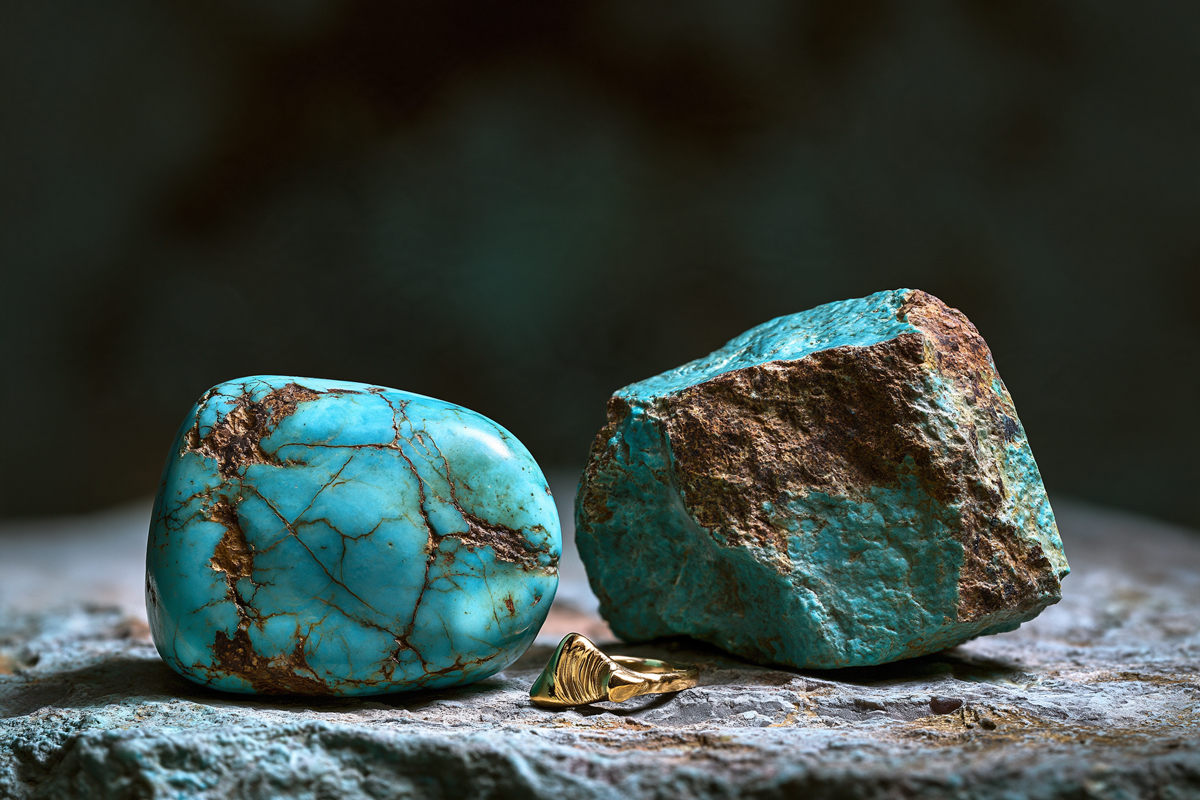
Turquoise ranges from pale sky blue through greenish blue to green. Chemical composition, porosity and geological formation conditions can all influence its appearance.
Some stones contain brown, black or yellowish veins and patches known as matrix. These are remnants of the host rock in which the turquoise formed. Matrix can be a natural feature, but it does not by itself prove that a stone is natural or untreated.
Hardness and Durability
Turquoise ranks about 5 to 6 on the Mohs hardness scale. It can be suitable for jewelry, but it requires more care against scratching than harder gems such as sapphire or quartz.
Durability also depends on texture and porosity. Fine-textured, denser material is generally more durable, while porous turquoise may be treated to improve stability or appearance.
History and Symbolism of Turquoise
Turquoise is one of the world’s oldest ornamental gemstones, with a history spanning cultures including ancient Egypt, Persia, China and the Americas.
Across different traditions it has been associated with ideas such as good fortune, protection, victory and prosperity. These are cultural beliefs rather than proven physical or medical effects. Today, turquoise is valued for its color, long history and symbolic associations.
Are Firuze and Turquoise the Same Stone?
Yes. In Turkish, “firuze” and “turkuaz” refer to the same mineral. The traditional Persian name is related to piruzeh, while the English word “turquoise” developed from an Old French expression meaning “Turkish stone.”
The terms therefore do not describe two different gemstones.
How Can You Tell If Turquoise Is Real?
The market can include natural turquoise, treated turquoise, synthetic material and imitations made from other dyed minerals or manufactured materials. No single home test can reliably identify all of them.
Heating, burning, scratching or cutting a stone can cause permanent damage and should not be used as authenticity tests. Color distribution, matrix and surface texture may provide clues, but none is definitive on its own.
When buying turquoise, check whether the seller discloses if the stone is natural, synthetic or treated. For valuable pieces, professional gemological testing is the most reliable approach.
How to Style Turquoise Jewelry
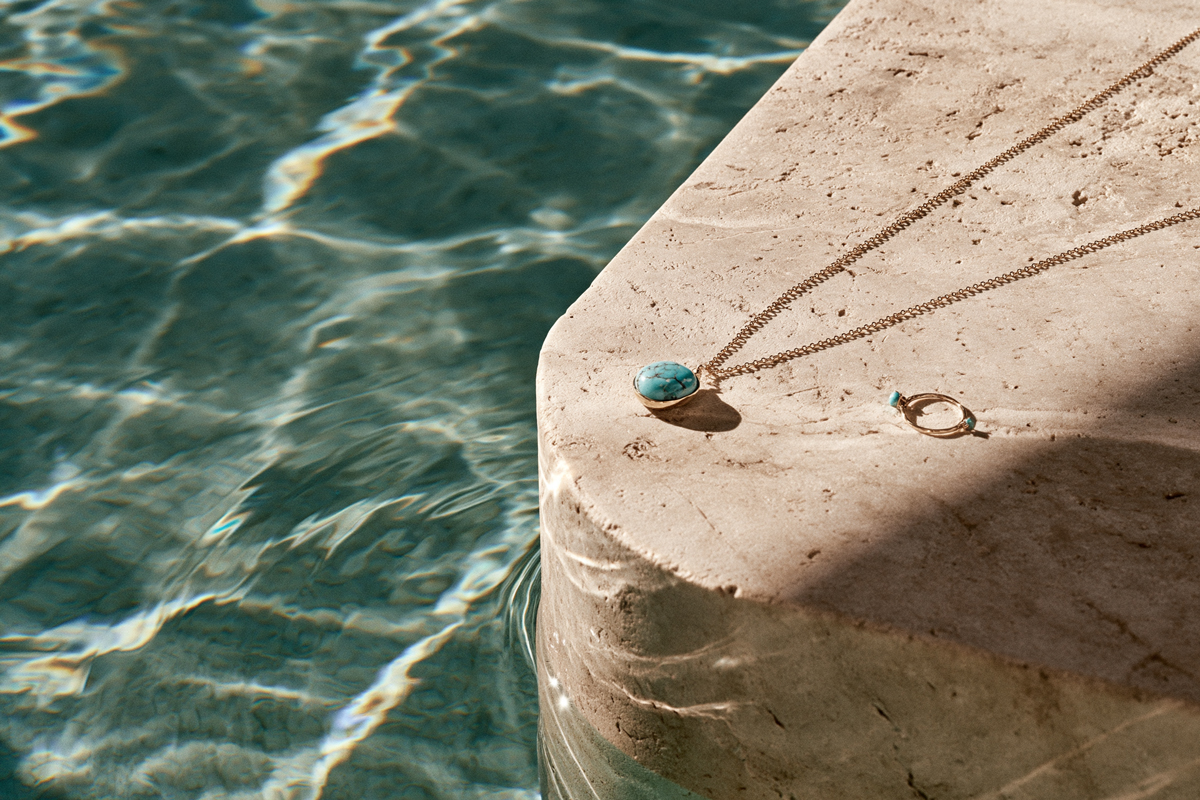
The blue-green color of turquoise pairs particularly well with white, cream, beige, denim and earth tones. Using one turquoise piece as the focal point can keep the overall look clean and balanced.
A turquoise pendant can stand alone over a white shirt or simple T-shirt, while smaller turquoise rings can work easily with both office and weekend outfits.
For layered necklaces, combine a turquoise pendant with plain gold chains at different lengths. With rings and bracelets, keeping the surrounding pieces simple allows the color of the stone to remain the focal point.

How Should Turquoise Be Cleaned and Cared For?
Because turquoise can be porous, it should be protected from prolonged contact with perfume, cosmetics, cleaning products, oils and harsh chemicals. Applying perfume and skincare before putting on turquoise jewelry can help reduce direct exposure.
For routine care, a soft cloth may be enough. When needed, turquoise can be cleaned gently with warm, mildly soapy water, then rinsed and dried carefully. Steam and ultrasonic cleaners should not be used.
Some turquoise is treated with wax, resin or polymers to improve color or stability. Heat and certain solvents can damage treated surfaces, so always follow any care information supplied with the piece. Store turquoise separately from harder jewelry to reduce scratching.
Color in Its Most Natural Form
Discover gold jewelry that brings warm metal tones together with colorful stones.
Explore Colored Stone JewelryFrequently Asked Questions
Are firuze and turquoise the same stone?
Yes. They are two names used in Turkish for the same turquoise mineral.
How hard is turquoise?
Turquoise ranks about 5 to 6 on the Mohs hardness scale, so it should be protected from harder surfaces that may scratch it.
Can you test real turquoise at home?
Home tests involving heat, burning or scratching are not reliable and can damage the stone. Professional gemological testing is safer for valuable pieces.
How should turquoise be cleaned?
Use a soft cloth or, when necessary, warm mildly soapy water followed by careful rinsing and drying. Avoid steam and ultrasonic cleaners.
Why can turquoise change color?
Porous turquoise can absorb skin oils, cosmetics and chemicals over time. High heat and some chemicals can also affect its color and surface appearance.